Behaviour Management Strategies in Childcare

Updated: Feb 1
In a rush? Here's a quick rundown.
Challenging behaviours like tantrums, biting, and saying "no" are normal as children learn to assert themselves and navigate big feelings.
Positive behaviour management strategies work better than punishment — children respond to proactive rule-setting, encouraging words, and positive role modelling.
Clear, consistent rules give children a sense of comfort and security — use positive wording like "please pack up the blocks" instead of "don't leave blocks out."
Praise specific behaviours rather than labelling children — "You made the room tidy by putting toys away" reinforces what's expected without labelling the child as "good" or "bad."
Little children can have big feelings and exhibit big, sometimes not-so-desirable behaviours! It's a very normal part of their development to test limits, have tantrums, and say "no" as they learn to assert themselves.
For some children, challenging behaviours can be particularly pronounced. Toddlers and preschoolers may exhibit anxiety or distress by biting, snatching, running away, bullying, or in other ways you won't find acceptable.
Whatever the behavioural challenge, one thing remains consistent — positive behaviour management strategies are much more likely to be successful than negative ones. Little humans respond much better to proactive rule-setting, encouraging words, and positive role modelling than punishment or being constantly told "no."
Why Children Need Clear Rules and Limits
Children do not come into this world knowing the "rules." They need to be actively taught the best ways to behave in different situations, with a clear set of guidelines and limits. These things help ensure that they can play and interact happily and safely.
Providing clear, consistent rules is also beneficial because it gives children a sense of comfort. When a child doesn't know what's expected of them, they can become anxious about getting things wrong and may act out.
Think about a time when you attended a party where you didn't know anyone or joined a new club. You most likely felt apprehensive about not knowing what to expect or how to behave. Once you understood these things, you felt much more comfortable and developed a sense of belonging.
Children feel the same way in unknown situations. You can help them by spelling out what they need to do to be successful and reiterating it often.
What Makes Rules Effective
For rules to work, they need to be:
Consistent — The same across all settings where possible
Positively worded — Telling children what to do rather than what not to do
Meaningful — Serving a clear purpose, such as ensuring everyone gets a fair share or making an activity safe
Age-appropriate — Simple and clear enough for young children to understand

Using Positive Language
Children respond better to hearing "yes" rather than "no," or "do" rather than "don't."
Communicate rules using positive phrases that tell children what you want them to do.
Instead of saying: "Don't leave the blocks out" Try: "Please pack up the blocks after playing"
Instead of saying: "Stop running!" Try: "Walking feet inside, please"
Instead of saying: "Don't hit your brother" Try: "Gentle hands with your brother"
This approach ensures children know what's expected, rather than just telling them "no" and leaving them to figure out what they should do instead.
The Power of Role Modelling
Children learn from the behaviour of those around them. Toddlers and preschoolers take their cues firstly from the important adults in their lives, including parents and childcare educators. It's crucial that adults demonstrate the same behaviour we want children to display.
Behaviours we can role model:
Sharing and taking turns
Speaking kindly and using manners
Providing comfort to others
Waiting patiently
Managing frustration calmly
It can be helpful to vocalise what you're doing so the child takes note. For example: "Oh, Jenny is already using my scissors. That's okay, I can wait until she has finished."
Modelling When Things Go Wrong
It's equally important to demonstrate positive behaviour when we haven't done the right thing or have become angry. Showing how to admit a mistake, apologise, or take time out to calm ourselves down are all important lessons for young children to observe.
Children learn as much from watching us handle difficult moments as they do from watching us do things perfectly.

Using Children as Role Models for Each Other
Most children are naturally inclined to observe and be like their peers. Ensuring positive behaviour is the norm in group situations allows children to observe role modelling from each other.
Ways to encourage peer role modelling:
Openly verbalise expectations: "We pat the guinea pigs gently on their backs"
Acknowledge when children demonstrate positive behaviours
Address negative behaviours so children clearly see what's not okay
Praise specific actions so other children learn what's expected
Clarity and consistency are key for effective behaviour management.
Helping Children Reflect on Their Behaviour
It takes time for children to see through others' eyes and understand the impact of their behaviour on others. We can help them take this developmental step by asking reflective questions.
Questions that build empathy:
"How would it make you feel if someone did that to you?"
"I wonder how Sarah felt when that happened?"
"What do you think we could do differently next time?"
Keep your tone calm and gentle, and focus on the child's learning rather than blame. Young children are still developing the ability to understand others' perspectives, so patience is essential.
Using Praise Effectively
The words we use to encourage children are important. Children typically want to "do a good job" and will do well when they can. Showing children how to do things the desired way, through rules and role modelling, then offering plenty of praise, are great behaviour management strategies.
Why negative words backfire:
Constant messages of being "wrong" or "naughty" can batter a child's confidence
Children may feel they'll never win approval and give up trying
They may even begin to match their behaviour to the negative messages they receive
Negative words can cause a negative spiral resulting in more undesired behaviour
"Bad" behaviour rarely arises because a child wants to be bad, but more because they're not presently equipped to do better. Remembering this when faced with challenging behaviour can help you respond with encouragement rather than a telling-off.
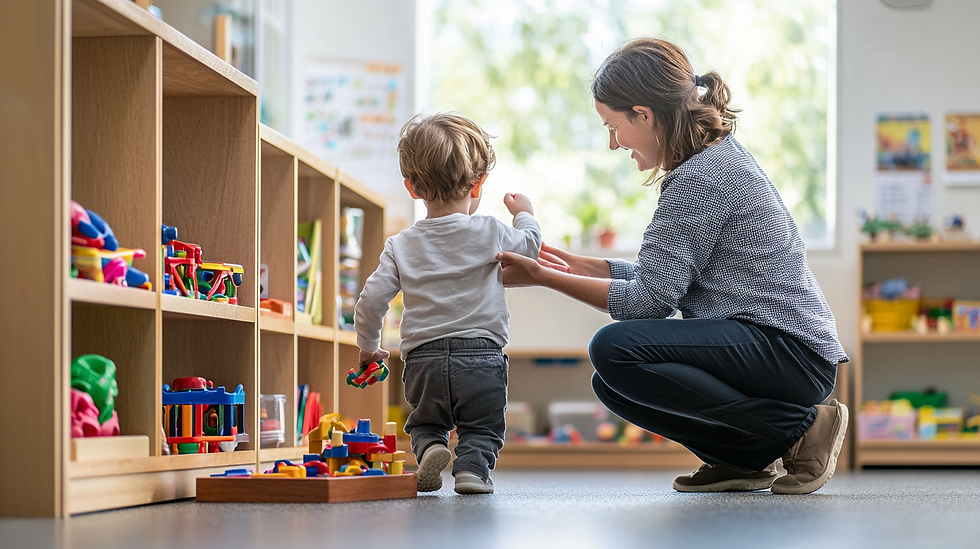
How to Praise Effectively
Find daily opportunities — Try to find at least one opportunity every day to praise every child in your care. Catch them doing something kind, trying something new, tidying up, or demonstrating another desirable behaviour.
Be specific — Rather than simply saying "Great job" or "Good boy," specify what merited your praise: "You have made the room so tidy by putting your toys away."
Focus on the action, not the child — This reinforces the expected behaviour and puts the focus on the action being "good" (or not good), rather than labelling the child.
Providing positive encouragement helps children feel safe to try new things, building both their competence and confidence. That feeling of safety is an important basis for building resilience.
Keeping Strategies Consistent
It's ideal to have the same expectations across all settings, including at home and in childcare. This isn't always possible, but it helps to keep an open dialogue between parents and educators.
Tips for consistency:
Discuss the childcare's approach to behaviour management at enrolment
Share strategies that work well at home or at the centre
Keep communication open about any behavioural challenges
Work together on approaches so children receive consistent messages
When children receive the same guidance at home and at childcare, they feel more secure and clear about expectations.
FAQ
Why does my toddler have tantrums and say "no" all the time?
Testing limits, having tantrums, and saying "no" are completely normal parts of development as children learn to assert themselves and navigate big feelings. They're not being deliberately difficult — they're developing independence and learning to express emotions they don't yet have the skills to manage.
Why is positive behaviour management more effective than punishment?
Children respond better to proactive rule-setting, encouraging words, and positive role modelling than punishment or being constantly told "no." Positive strategies teach children what to do, while punishment only tells them what not to do. Positive approaches also build confidence and maintain the trusting relationship needed for guidance.
How should I word rules for young children?
Use positive language that tells children what to do rather than what not to do. Instead of "Don't run," say "Walking feet, please." Instead of "Stop hitting," say "Gentle hands." This gives children clear direction about expected behaviour rather than leaving them to figure it out.
How can I praise my child effectively?
Be specific about what behaviour merited your praise. Rather than "Good job" or "Good girl," say "You made the room so tidy by putting your toys away." This reinforces the expected behaviour and focuses on the action rather than labelling the child. Find at least one opportunity to praise each day.
What should I do when my child misbehaves?
Remember that "bad" behaviour usually arises because a child isn't yet equipped to do better, not because they want to be bad. Stay calm, redirect to the expected behaviour using positive language, and when the situation is calm, help them reflect with questions like "How would it make you feel if...?" Focus on teaching rather than punishing.
See Our Positive Approach in Action
Book a tour and discover how The Green Elephant uses positive behaviour management strategies to create a joyful environment where children thrive.


Comments